Report · Quebec
Supreme Court upholds most of Quebec's Bill 21 secularism law
The Bill 21 Supreme Court ruling keeps Quebec's religious symbols ban in force, with one exception for elected members of the National Assembly, and sends the premier to talks with his counterparts.

Key points
- The Supreme Court of Canada upheld most of Bill 21, Quebec's secularism law, and found that Quebec validly used the notwithstanding clause to shield it.
- The court found that section 8 of the law infringes democratic rights as it applies to members of Quebec's National Assembly.
- Premier Paul St-Pierre Plamondon plans to bring the ruling to his provincial counterparts in Toronto on Dec. 7 and 8.
The facts
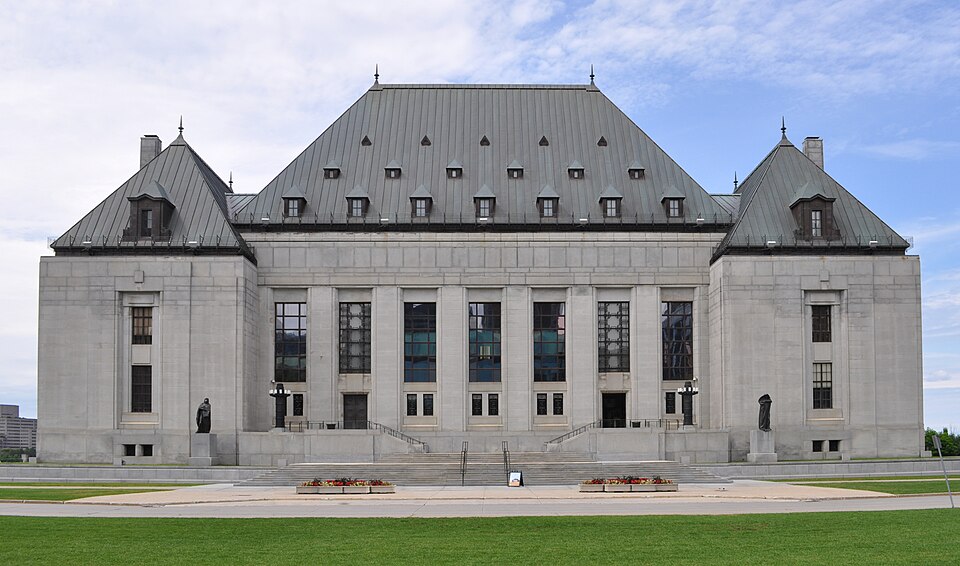
OTTAWA The Supreme Court of Canada released its decision on Friday, Nov. 27, on Quebec's secularism law, known as Bill 21. The court's case summary says the law stands, apart from one provision that breaches the voting and candidacy rights in section 3 of the Charter of Rights and Freedoms when applied to National Assembly members. The justices turned away the appeals by the English Montreal School Board and others, and also the cross-appeal by Quebec's attorney general.
Bill 21 was adopted in 2019. Under it, teachers, police officers, judges and some other public-sector workers in positions of authority cannot wear religious symbols while working, CBC News reported. After the Bill 21 Supreme Court decision, the ban applies to everyone it covered before, except elected members of the National Assembly.
The justices found that Quebec validly used the override clauses in the Canadian Charter and in Quebec's own charter. "Bill 21 is rooted in Quebec’s legitimate and historical commitment to ensuring the laicity of the state in a free and democratic society," wrote Chief Justice Richard Wagner in the judgment, as CBC quoted it.
The court was divided. It rejected the argument based on the Charter's section 28, which deals with equality between men and women, by a 4-3 vote, CBC reported. The justices also split on whether to declare, without striking the law down, that it violates Charter rights, the Canadian Press reported. The court's summary says judges keep that power even when the clause is used, but no declaration was made here.
The court also found that Bill 21 does not infringe the education rights of Quebec's English-speaking minority. It accepted that hiring and promotion of some staff at English-language boards could be constrained, but said no one had shown harm to concerns unique to that minority.

Who is affected
Teachers, principals and other public-sector workers in Quebec remain bound by the restrictions. CityNews Montreal reported that Québec solidaire criticized the law over its effect on classrooms and daycares at a time of staff shortages. "This law is unjust and discriminatory," said Roxane Milot, the party's critic for education, secularism and justice.
According to CityNews, the Canadian Muslim Forum said it was profoundly disappointed and saw the result as a blow to religious freedom and women's rights.
The English Montreal School Board lost its challenge. The one part of the law the court found at fault, section 8, concerns elected members of the National Assembly whose faith requires a face covering, who could otherwise be kept from sitting and taking part in legislative business.
What it means
The decision gives provinces clearer ground on the notwithstanding clause. The justices agreed that governments may invoke the clause ahead of time, as Quebec did, and may override several Charter rights at once, the Canadian Press reported. Ontario, Saskatchewan and Alberta have also used it pre-emptively, as has Quebec for other laws.
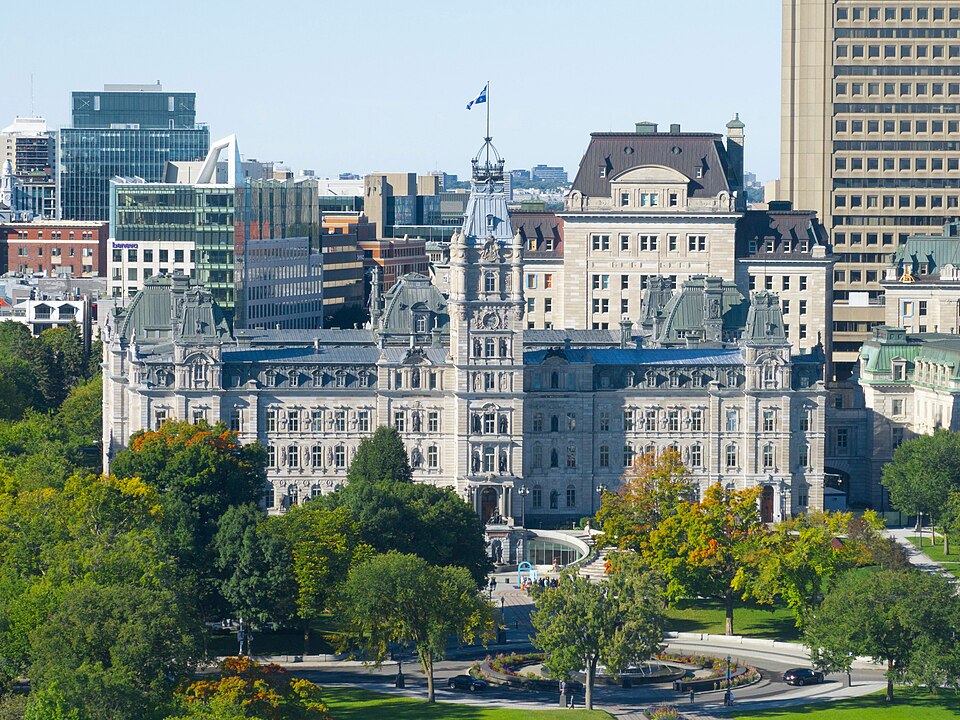
Reaction in Quebec split along political lines. Premier Paul St-Pierre Plamondon called the ruling good news for secularism but said the provinces' ability to use the clause has been weakened. "Secularism has won, but we have just witnessed a setback for the provinces," he told a press conference in Quebec City, according to CityNews. He argued that the ruling lets courts weigh in on laws protected by the clause and described Quebec as caught in an unstable system.
Conservative Party of Quebec leader Éric Duhaime called the decision a victory for secularism and for Quebec's own authority. Mathieu Lévesque, who leads the Coalition Avenir Québec on an interim basis, said on X that the clause's application remains fully intact.
Three justices who found a violation of gender equality also concluded that the law has a greater impact on Muslim women, the Canadian Press reported.
What happens next
St-Pierre Plamondon said he will begin discussions with fellow premiers when they meet in Toronto on Dec. 7 and 8, adding that the time is right to consider amending the Constitution.
CBC reported that the clause protecting Bill 21 expires in 2029 unless the legislature renews it, because such clauses expire after five years. Charles Milliard, the Quebec Liberal Leader, said during the last election that his party would not renew it.
Sources
- Supreme Court of Canada: English Montreal School Board v. Quebec (Attorney General), Case in Brief
- CBC News: Supreme Court decision on Bill 21
- CBC News: Bill 21 ruling live coverage
- Lethbridge Herald / The Canadian Press: Supreme Court of Canada upholds most portions of Quebec secularism law
- CityNews Montreal: Bill 21 ruling: victory for secularism, setback for autonomy
- CityNews Montreal: Montreal teachers react to Bill 21 ruling
Fact-check. This story was written from 6 verified sources (6 independent reports); 8 factual claims checked against outside sources, none contradicted. Published Nov. 27, 2026, 1:16 p.m. PT.
Spotted an error? Write to [email protected]. Read our corrections policy.
Know something we should report in your community? Send a tip to [email protected].