Report · Ontario
Ontario tightens e-bike rules, starting May 1, 2027
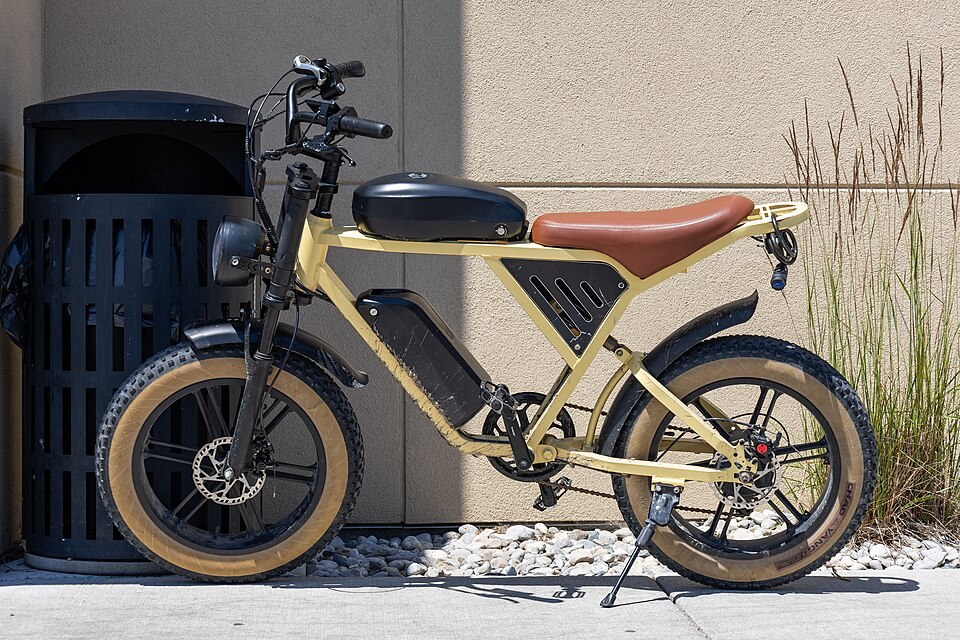
Under new Ontario e-bike rules announced Thursday, motorcycle-style electric vehicles sold as e-bikes will need a licence, registration and insurance from May 1, 2027.

Key points
- From May 1, 2027, electric vehicles built like motorcycles or scooters will need a driver's licence, registration and insurance in Ontario, and will no longer pass as e-bikes.
- Vehicles that meet the province's e-bike definition stay legal without a licence or insurance, and they are limited to 32 km/h of motor assistance and 500 watts.
- Offenders can be fined as much as $2,500 and have their vehicles impounded, though Sarkaria described the months before May 1 as a grace period.
The facts
TORONTO Ontario will require a driver's licence, vehicle registration and insurance for electric vehicles shaped like motorcycles or scooters that are now ridden as e-bikes. Transportation Minister Prabmeet Sarkaria announced the change on Thursday, Nov. 26, at the Toronto police Traffic Services headquarters, according to TorontoToday.
The new Ontario e-bike rules take effect on May 1, 2027. After that date, an e-bike must have an exposed bicycle-style frame, working pedals and motor assistance that stops at 32 km/h, plus other conditions, to stay legal without a licence, registration or insurance.
The province's backgrounder says a vehicle that fails those tests does not qualify, even if the seller labels it an e-bike. Motorcycle-style and scooter-style vehicles cannot be operated where bicycles are permitted. They can use roads only if they meet the requirements for motorcycles or mopeds.
Ontario will have two e-bike classes. Class A has a maximum weight of 55 kilograms and Class B has a maximum of 120 kilograms, TorontoToday reported. Both are limited to 32 km/h of motor assistance and 500 watts of motor power.
Sarkaria said the rules have not been updated since 2009. "Simply putting pedals on a motorcycle doesn't make it a bicycle," he said.
Toronto police Chief Supt. Mandeep Mann said officers increasingly come across vehicles that resemble and perform like motorcycles or mopeds. Some were built or altered to go beyond the provincial speed and power limits, he said. "A vehicle is not a legal e-bike simply because it is available for sale, it's marketed as an e-bike, or it has pedals attached to it," Mann said.
Toronto police recorded 909 collisions involving micromobility devices from Jan. 1 to Nov. 22, and 364 of them involved e-bikes. Mann said enforcement aimed at e-bikes had climbed 106 per cent from a year earlier by Nov. 22, and e-scooter enforcement had risen 94 per cent.
The province set the penalty for breaking the rules at a maximum fine of $2,500, along with impoundment.
Who is affected
Owners of high-powered, motorcycle-style electric vehicles face the biggest change. They will need a licence, registration and insurance that match the class of vehicle they ride. For them, there is no separate e-bike licensing or e-bike insurance: their vehicles fall under the motorcycle or moped rules. That includes vehicles a store labels as e-bikes when they fail the provincial tests.
Riders of conventional e-bikes are not affected on those points. Those riders must still be 16 or older, wear an approved helmet and obey the road rules that apply to cyclists. Passengers must also wear approved helmets, the province said.
Toronto's food delivery industry relies heavily on e-bike couriers. Asked whether the changes could disrupt it, Sarkaria said the province does not intend to discourage e-bike use but to make sure vehicles are operated safely, TorontoToday reported.
In Mississauga, Mayor Alvin Tedjo welcomed the announcement, according to Insauga. Insauga reported that unsafe riding has been a city concern for two years, mainly by some e-scooter users and less often by people on e-bikes. "For years, Mississauga residents have been calling for stronger safety measures around e-bikes," Tedjo said online.
What it means
The change draws a line between bicycles with motor assistance and vehicles that work like motorcycles. The province argues that the second group puts pedestrians, cyclists and drivers at risk when it is sold and ridden as an e-bike, while police say clear rules help them enforce the law.
In a statement, Mann said clear, consistent requirements will help riders and retailers know what is expected of them. Sarkaria said in the province's news release that the rules should depend on what a vehicle is designed to do.
Insauga reported that the transportation ministry opened public consultation on the plan in April and stopped taking comments on June 7.

What happens next
The rules take effect on May 1, 2027. According to TorontoToday, Sarkaria said the time before that date works as a grace period, with enforcement starting on May 1.
The province said it is raising awareness with police, municipalities, couriers, manufacturers, retailers and insurers. Riders should ask their own municipality whether extra local e-bike rules apply.
Solicitor General Michael Kerzner said the province also proposes Fire Code changes on using, charging and storing lithium-ion batteries safely.
Sources
- TorontoToday: Province to require licensing, insurance for some e-bikes from May 1
- Ontario Newsroom: Ontario strengthening e-bike regulations to protect road users (backgrounder)
- Ontario Newsroom: Ontario strengthening e-bike regulations to protect road users
- Insauga: New e-bike rules in Ontario welcomed by Mississauga
Fact-check. This story was written from 10 verified sources (6 independent reports); 8 factual claims checked against outside sources, none contradicted. Published Nov. 26, 2026, 1:17 p.m. PT.
Spotted an error? Write to [email protected]. Read our corrections policy.
Know something we should report in your community? Send a tip to [email protected].