Report · Alberta
Alberta bike lanes could be removed under new provincial bill
Bill 43 would let the province veto new lanes that take road space from drivers and remove some existing ones, which could leave Edmonton and Calgary with the cost.
Key points
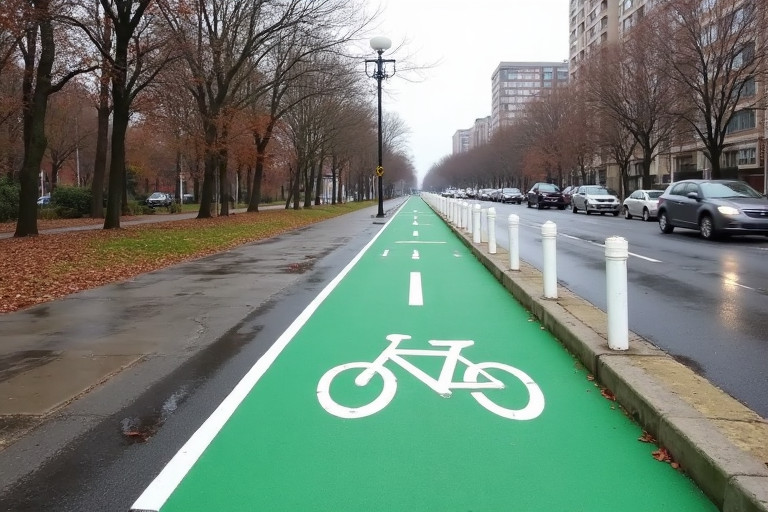
- Alberta's transportation minister has proposed Bill 43, which would bar new bike lanes that reduce road space for vehicles unless he approves them.
- The bill would also let the province remove some existing lanes, and reports differ on how clearly it says cities would pay.
- Edmonton's and Calgary's mayors have criticized the move, and the government expects the changes to take effect in April 2027 if the bill passes.
The facts
EDMONTON Alberta's government on Thursday, Nov. 19, proposed a law that would give the province power over bike lanes in Edmonton, Calgary and other municipalities. Transportation Minister Devin Dreeshen is behind the legislation, called Bill 43. Its short name is the Safe and Sensible Roads Act. If it passes, no new bike lane could take road space from vehicles unless he approves it, according to The Canadian Press, as published by the St. Albert Gazette.
The bill would also allow the province to take out existing lanes that cut road capacity for drivers, the government said in a news release. Municipalities could ask for exemptions case by case and would have to supply supporting information, CBC News reported. The bill sets out no criteria for approving exemptions or for choosing which lanes to remove.
Dreeshen told a news conference that the aim is to protect the capacity of roads. "It is intended to preserve roadway capacity at the end of the day," he said, according to CBC.
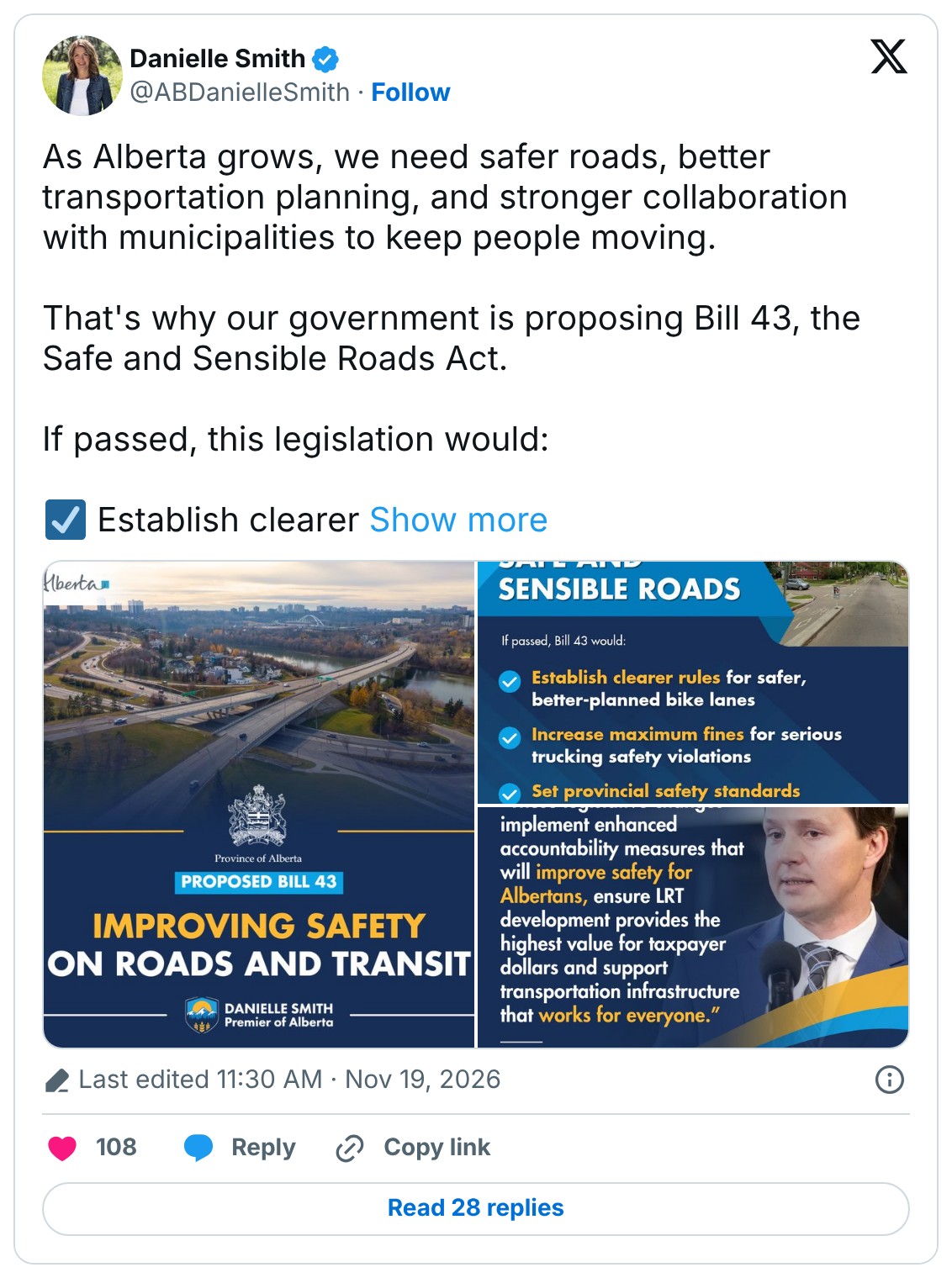
Premier Danielle Smith promoted the bill on X. "As Alberta grows, we need safer roads, better transportation planning, and stronger collaboration with municipalities to keep people moving," the premier wrote on X.
The government's news release said the changes would make cities consider what lanes mean for traffic, commuters, emergency services and freight.
Who would pay for removals is where accounts differ. The Canadian Press reported that the bill makes municipalities cover the cost of removing any lane. Dreeshen told CBC that cities would be responsible for removal costs if traffic data showed a lane had harmed a community, and he pointed to their large bike lane budgets. Global News, which also carried the Canadian Press report, added an editor's note saying an earlier version of its story had said the bill did not specify who would pay, based on inaccurate information from government officials.
Who is affected
The bill would reach any Alberta municipality that builds or keeps a bike lane, and cyclists in Edmonton and Calgary are the most visible group. Calgary Mayor Jeromy Farkas has spoken against provincial involvement. Edmonton Mayor Andrew Knack has voiced worry that costs would be shifted onto local taxpayers, according to the Canadian Press.
Cycling advocates have warned that taking out lanes would put people on bikes at risk. Dreeshen has said for months that lanes are fine in some places, but not where they remove parking or driving lanes.
Bill 43 also covers more than cycling. The government says it would raise the maximum fine for major commercial trucking incidents, including bridge strikes and repeat violations, from $10,000 to $50,000. It would also set provincial minimum safety standards for e-scooters and similar devices, and widen provincial oversight of municipal LRT projects.
What it means
The province and the cities describe the bill in different terms. The government frames it as accountability and safety, with Dreeshen saying it would make sure transportation infrastructure works for everyone. Critics describe it as an intrusion into local decisions. Farkas has opposed the province stepping in, and Knack has warned about the burden on taxpayers.
Open questions remain. The bill leaves out the criteria for exemptions and for choosing lanes to remove, so how widely Alberta bike lane removal would apply is not yet clear. Dreeshen said the province will request traffic impact assessments for certain lanes and will pick out problem spots together with cities.
Dreeshen told CBC in August that he felt encouraged by an Ontario Court of Appeal decision. The appeal court reversed a lower court ruling that had called Ontario's plan to swap some bike lanes for car lanes unconstitutional.
What happens next
Bill 43 must now move through the Legislature before it becomes law. If it passes, the government expects the legislation to take effect in April 2027, according to CBC. More details are to be set out in regulations, which are also expected in the spring.
The government's release said it will publish the complete provincial framework and safety minimums for e-scooters and similar devices in early 2027.
Sources
- St. Albert Gazette (The Canadian Press): Alberta proposes provincial law giving it power to remove municipal bike lanes
- CBC News: Alberta Bill 43 and bike lanes
- Global News: Alberta transportation Bill 43: bike lanes, transit, roads
- Government of Alberta: Bill 43, the Safe and Sensible Roads Act 2026
- @ABDanielleSmith on X: post
Fact-check. This story was written from 6 verified sources (4 independent reports); 1 public post on X quoted verbatim and linked; 8 factual claims checked against outside sources, none contradicted. Published Nov. 19, 2026, 6:26 p.m. PT.
Spotted an error? Write to [email protected]. Read our corrections policy.
Know something we should report in your community? Send a tip to [email protected].